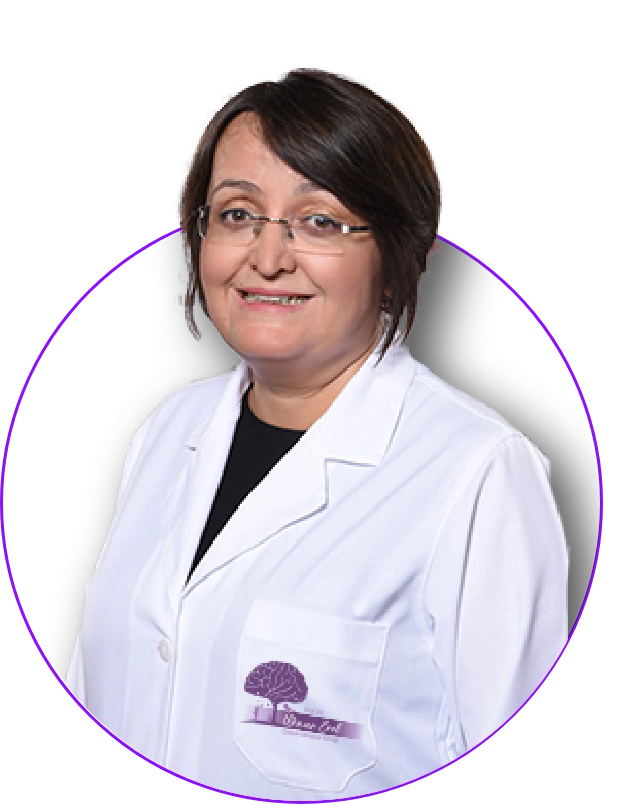
Prof. Dr. İlknur EROL

She was born in Karabük in 1972. She completed her primary education at Karabük Demir Çelik Primary School, her secondary education at Karabük Beşbinevler Secondary School, and her high school education at Karabük Demir Çelik High School. She graduated from Marmara University Faculty of Medicine between 1989-1996. Between 1997-2002, she completed her specialization in the Department of Child Health and Diseases at Gazi University Faculty of Medicine.

About Me Make an Appointment

Attention deficit hyperactivity disorder (ADHD) is a neurodevelopmental condition characterized by shortened attention span, impulsivity, and excessive activity in children. With early diagnosis and proper treatment, academic success, social adaptation, and quality of life can be significantly improved.

Symptoms of attention deficit in children manifest as poor school performance, difficulty focusing, and forgetfulness. This condition negatively affects not only academic achievement but also social relationships and daily living skills. Progression without diagnosis may lead to secondary mental health problems.

Hyperactivity and impulsivity may cause the child to move uncontrollably, frequently interrupt others, and engage in dangerous behaviors. This situation may lead to difficulties in parent-child relationships and disagreements with teachers and peers. Early intervention is of great importance.

ADHD treatment is multifaceted; medication, psychotherapy, and family education can be applied together. With regular follow-up and an individualized treatment plan, children’s academic, social, and emotional development is supported. An approach appropriate for the child is decisive for long-term success.

CategoryInformation
Medical TermAttention Deficit Hyperactivity Disorder (ADHD)
Common NameHyperactivity, distractibility
FrequencySeen in 5–8% of school-age children
Age of OnsetUsually begins between ages 3–6; becomes evident during school age
Subtypes (according to DSM-5)Predominantly Inattentive Type

Predominantly Hyperactive-Impulsive Type

Combined Type

Main CausesGenetic predisposition, differences in brain structure and functioning, prenatal/perinatal risks
SymptomsInability to sustain attention, forgetfulness, excessive talking, inability to wait one’s turn, impulsive behaviors, inability to stay still
Diagnostic MethodsClinical evaluation, teacher-parent observation forms (DSM-5, Conners, Vanderbilt scales), attention tests, psychiatric evaluation
Treatment MethodsBehavioral therapy, family education, school support programs, pharmacotherapy (methylphenidate, atomoxetine, etc.), individualized education programs
Conditions Requiring Emergency InterventionImpulsively harming self/others, academic failure, severe social maladjustment
ComplicationsLearning difficulty, anxiety, depression, deterioration in social relationships, decline in school performance
Follow-up and MonitoringRegular follow-up in cooperation with Pediatric Neurology, Child Psychiatry, special education specialists, and the school guidance service
Lifestyle RecommendationsStructured daily routine, positive reinforcement, attention-enhancing games, limiting screen time, quality sleep routine
Contact us for detailed information and to make an appointment about the subject!


    Table of Contents

    What is Attention Deficit Hyperactivity Disorder (ADHD) and how common is it in children?

    Attention Deficit Hyperactivity Disorder (ADHD) is a condition that starts from the preschool period and becomes evident in school-age children. This condition manifests itself through the child’s difficulties in controlling behavior and focusing attention on one point. ADHD is much more common than is thought and is seen at a rate of approximately 4% to 8%.

    What are the symptoms of Attention Deficit Hyperactivity Disorder (ADHD) in children and how do they differ?

    The symptoms of Attention Deficit Hyperactivity Disorder (ADHD) in children can basically be grouped under two main headings: attention deficit and hyperactivity-impulsivity. However, there is an interesting point that not every child with ADHD may show all of these symptoms at the same time and with the same severity. Just like the different colors of a rainbow, ADHD may manifest itself in different ways in children. In some children, the most prominent problem is the shortness of attention span. These children may have difficulty focusing on homework or a game. As if a radio station is constantly changing in their minds, they may jump from one subject to another. In some other children, excessive mobility and impulsivity are in the foreground. These children have difficulty staying in place and are constantly in motion. As if they have a motor inside them that never turns off, they may run and jump around. There are also children in whom these two groups of symptoms are seen together; they both have difficulty concentrating and may display excessively active and impulsive behaviors. An important point here is that the term “hyperactivity” does not fully describe all children with ADHD. ADHD can also exist without hyperactivity, especially in situations where attention deficit symptoms are in the foreground.

    How is Attention Deficit Hyperactivity Disorder (ADHD) diagnosed and which factors are important?

    Diagnosing Attention Deficit Hyperactivity Disorder (ADHD) actually resembles detective work. Just as a detective reaches a conclusion by putting together the clues at a scene, we try to make the diagnosis by observing the child’s behavior in different environments and collecting various pieces of information. The most important point here is that ADHD symptoms must have started before the age of 7 and must be causing problems in at least two different environments (for example, at home and at school). While this condition may not be evident within the family and in the early period, symptoms appear more clearly in a more structured, rule-based, and crowded environment such as school. In making the diagnosis, not only the presence of symptoms but also the number of these symptoms, how long they have continued, and to what extent they negatively affect the child’s life are of great importance. It should not be forgotten that many children may show inattention or excessive activity from time to time. However, for an ADHD diagnosis, these symptoms must be more frequent, more intense, and negatively affect the child’s daily life. Today, there is no laboratory test (blood test, urine test, EEG, etc.), brain imaging method (brain tomography, MRI, etc.), or psychological test that can help diagnose ADHD. Diagnosis is made entirely through the clinical observation and evaluation of experienced and knowledgeable specialists in this field (such as child psychiatrists, child neurologists, clinical psychologists). Careful observation of the child’s behavior by both parents and teachers constitutes an important step in the diagnostic process.

    Why are pediatric neurology evaluation and EEG important in children with Attention Deficit Hyperactivity Disorder (ADHD)?

    In some children diagnosed with Attention Deficit Hyperactivity Disorder (ADHD), abnormalities in the brain’s electrical activity and even unnoticed seizures (epilepsy) may be seen. For this reason, it is of great importance that all children diagnosed with ADHD are evaluated by a pediatric neurologist. The pediatric neurologist evaluates the child’s general neurological condition and tries to detect possible additional problems. In addition, some medications used in ADHD treatment may trigger epileptic seizures. To minimize this risk, a sleep and wake EEG must definitely be performed in every child diagnosed with ADHD before starting medication treatment. EEG is a simple and painless test used to record the brain’s electrical activity. Through this test, it can be determined whether there is any electrical abnormality in the brain, and the treatment plan can be created accordingly. You can think of it like an inspection done to understand whether there is a problem in an electrical installation.

    Contact us for detailed information and to make an appointment about the subject!

    What is the relationship between Attention Deficit Hyperactivity Disorder (ADHD) and Specific Learning Disorder (SLD)?

    Specific Learning Disorder (SLD), just like ADHD, is another condition frequently encountered in childhood. SLD is when individuals, despite having normal intelligence levels, experience marked difficulty compared to their peers in specific areas such as reading, writing, or mathematics. All of these conditions, popularly known as “dyslexia” (reading difficulty), “dysgraphia” (writing difficulty), or “dyscalculia” (mathematics difficulty), are actually different types of SLD. SLD emerges when there is a problem in some basic steps experienced in the learning process. For example, situations such as mixing up letters while reading, omitting some letters while writing, or having difficulty performing mathematical operations may be symptoms of SLD. Although the exact causes of SLD are not fully known, it is thought to result from some differences in the functioning of the central nervous system and is generally a structural condition. For an SLD diagnosis to be made, it is important that the child’s intelligence level is within normal limits. Although ADHD and SLD are different conditions, they may sometimes be seen together. In other words, a child with attention deficit and hyperactivity problems may also have a learning disorder. Therefore, it is important to evaluate the learning skills of children diagnosed with ADHD as well. A detailed examination and some tests may be required in the pediatric neurology department to investigate the underlying genetic, metabolic, and neurological causes. SLD is a lifelong condition, but these difficulties can be overcome with the right psycho-educational approaches and follow-up and treatment carried out by specialists. Just like learning to play a musical instrument, children with SLD can also improve their reading, writing, and mathematics skills with the right methods.

    How does Attention Deficit Hyperactivity Disorder (ADHD) affect life in children and what long-term consequences can it have?

    Attention Deficit Hyperactivity Disorder (ADHD) in children is a condition that can affect not only school life but the child’s whole life. Academic achievement may decline due to distractibility and focusing problems, homework may be difficult to complete, and various problems may be experienced at school. Difficulties may also arise in social relationships. Situations such as impulsive behaviors and interrupting others may make it difficult to make and maintain friends. In addition, children with ADHD may often experience emotional problems such as low self-esteem, frustration, irritability, anxiety, and even depression. Excessive activity and impulsivity may also increase the risk of causing accidents and injuries. Sleep problems can also be frequently seen in children with ADHD. In the long term, untreated ADHD may continue into adulthood. Although hyperactivity symptoms tend to decrease with age, attention deficit and impulsivity problems generally continue. This condition may lead to difficulties in work life, relationships, and other areas of daily life in adulthood. However, it should not be forgotten that with early diagnosis and correct treatment approaches, the negative effects of ADHD can be significantly reduced, and these children can live a successful and happy life.

    How can children with Attention Deficit Hyperactivity Disorder (ADHD) be supported and what are the treatment approaches?

    Supporting children with Attention Deficit Hyperactivity Disorder (ADHD) actually requires teamwork. This team includes parents, teachers, doctors, and, if necessary, other specialists (such as psychologists, special education teachers). Treatment approaches usually include a combination of medication and behavioral therapies. Medication can significantly reduce ADHD symptoms, especially by regulating the levels of some brain chemicals (neurotransmitters) that provide attention and impulse control. Behavioral therapies, on the other hand, aim to teach the child and family strategies for coping with ADHD. Strategies such as establishing consistent routines, reducing distractions, communicating clearly and understandably, using reward systems, and applying effective discipline methods are important parts of behavioral therapy. Various supports and arrangements can also be made for children with ADHD in the school environment. Practices such as teachers’ patient and understanding approach, organizing the learning environment, dividing homework into small parts, and giving frequent feedback can increase the child’s school success and adaptation. Remember that every child is special and the treatment approach should also be shaped according to the child’s individual needs. The most important thing is to approach your child with love, patience, and understanding and to make them feel that you will always support them. Just like growing a sapling, children with ADHD can reach their potential with the right care and support.

    Frequently Asked Questions

    What are the symptoms of attention deficit hyperactivity disorder in children?

    In children with attention deficit hyperactivity disorder, symptoms such as inability to sustain attention, excessive activity, impatience, forgetfulness, difficulty following instructions, and hasty behaviors may be seen.

    What are the causes of attention deficit hyperactivity disorder in children?

    The cause of this disorder is the combination of multiple factors such as genetic predisposition, chemical imbalances in the brain, smoking or alcohol use during pregnancy, and environmental factors.

    How is attention deficit hyperactivity disorder diagnosed in children?

    Diagnosis is made by using parent and teacher observations of the child’s behaviors, detailed psychiatric evaluation, and standard scales. For diagnosis, the symptoms must be long-lasting and widespread.

    What are the risk factors in children with attention deficit hyperactivity disorder?

    A family history of ADHD, exposure to toxins during pregnancy, low birth weight, premature birth, and some neurological disorders may increase the risk.

    How does attention deficit hyperactivity disorder affect learning in children?

    Children with ADHD may experience difficulty in academic success in lessons, trouble completing homework, and problems complying with classroom rules due to distractibility.

    What are the non-drug treatment methods for attention deficit hyperactivity disorder in children?

    Behavioral therapy, family education, teacher support, attention improvement exercises, and creating an appropriate daily routine are among the non-drug treatment options.

    What complications may be seen in children with attention deficit hyperactivity disorder?

    If untreated, academic failure, low self-esteem, social maladjustment, friendship problems, and psychiatric disorders in later ages may be seen.

    What lifestyle changes are recommended for attention deficit hyperactivity disorder in children?

    Regular sleep, healthy nutrition, limiting screen time, encouraging physical activity, and daily routines may improve children’s quality of life.

    What is the recovery process like after treatment for attention deficit hyperactivity disorder?

    After treatment is started, there may be a significant reduction in symptoms. However, the recovery process varies from person to person and requires regular follow-up.

    How are emotional problems managed in children with attention deficit hyperactivity disorder?

    Emotional support, strengthening family communication, social skills training, and psychological counseling if necessary are important in managing emotional problems.

    Which Department or Doctor Should Be Consulted for Attention Deficit Hyperactivity Disorder in Children?

    Attention Deficit Hyperactivity Disorder (ADHD) is a common neurodevelopmental condition in school-age children. The Pediatric Neurology department plays an important role in the diagnosis and treatment of this disorder.