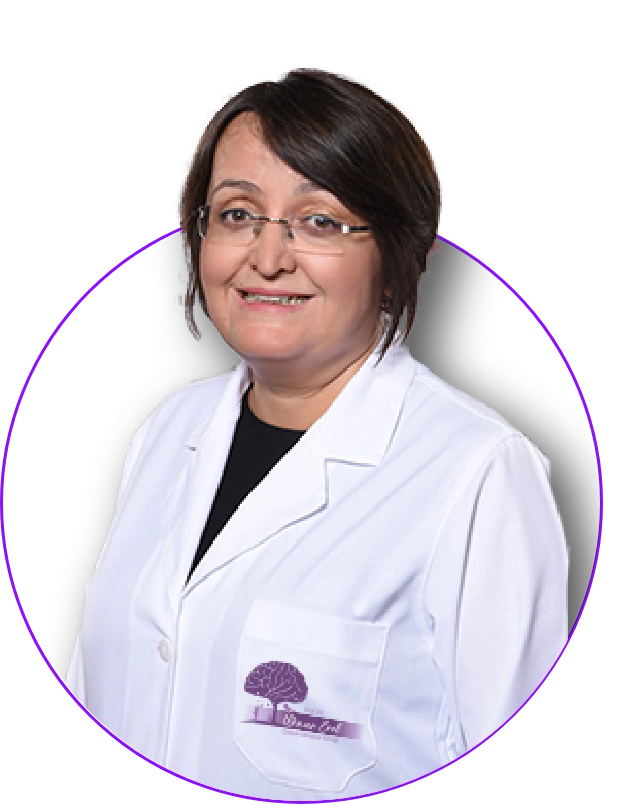
Prof. Dr. İlknur EROL

She was born in Karabük in 1972. She completed her primary education at Karabük Demir Çelik Primary School, her secondary education at Karabük Beşbinevler Secondary School, and her high school education at Karabük Demir Çelik High School. She graduated from Marmara University Faculty of Medicine between 1989-1996. Between 1997-2002, she completed her specialization in the Department of Child Health and Diseases at Gazi University Faculty of Medicine.

About Me Make an Appointment

Autism spectrum disorder is a neurodevelopmental condition characterized by difficulties in social communication and repetitive behaviors. Speech delay, lack of eye contact, and restricted interests are among the most common symptoms in children.

Signs of autism are usually noticed during early childhood. Difficulty in communicating with peers, limited play skills, and excessive adherence to routines are important in the diagnostic process.

Diagnosis is made through detailed observation, developmental tests, and specialist opinions. Early diagnosis is critically important for achieving positive outcomes in the child’s education and social life.

Individualized education programs, speech therapy, and behavioral approaches are applied in treatment. Together with family support, regular specialist follow-up improves the child’s quality of life and social skills.

CategoryInformation
Medical NameAutism Spectrum Disorder (ASD)
Common NameAutism
Frequency1 in every 44 children; 4 times more common in boys than girls
Age of OnsetSymptoms are usually noticed between 18-36 months
Main CausesGenetic predisposition, neurodevelopmental differences; the effect of environmental factors is being investigated
SymptomsLack of eye contact, difficulty in social interaction, repetitive behaviors, language delay, restricted interests
Diagnostic Criteria (DSM-5)Persistent deficits in social communication + repetitive behaviors and interests
Accompanying ConditionsIntellectual disability, attention deficit, epilepsy, anxiety disorders
Diagnostic MethodsDevelopmental evaluation, behavioral observations, ADOS (Autism Diagnostic Observation Schedule), family interviews
Treatment MethodsBehavioral therapies (ABA), special education, speech-language therapy, sensory integration therapy, social skills training
Medication TreatmentDoes not treat autism on its own; it may be recommended for accompanying conditions (anxiety, hyperactivity)
Conditions Requiring Emergency InterventionSelf-harming behaviors, severe anxiety crises, seizures
ComplicationsInsufficiency in academic and social areas, difficulties in independent living, emotional problems
Follow-up and MonitoringCooperation between pediatric neurology and child psychiatry; regular evaluation of the individualized education plan
Lifestyle RecommendationsEstablishing routines, regulating stimuli, family support, structured learning environments, early intervention
Contact us for detailed information and to make an appointment about the subject!


    What Is Autism?

    Autism is actually a neurodevelopmental condition that we can define as a developmental difference in the brain. Just like every person’s fingerprint, every child’s developmental path is unique. However, in autism, some distinctive features and differences become evident along this developmental path. We can think of this condition as the different instruments of an orchestra not playing in harmony. There may be some disruptions in communication between different parts of the brain, and this may affect the child’s way of engaging in social interaction, communicating, and displaying repetitive behaviors.

    What Are the Early Signs of Autism?

    The early signs of autism can usually be noticed in the child’s first years, and sometimes even in infancy. These signs may appear with different severity and in different forms in every child. Some of the most common early signs we encounter are the child not showing social interest like peers, avoiding eye contact, not responding to their name, delay in speech or no speech at all, playing with toys in unusual ways (for example focusing on the wheels of cars), displaying repetitive movements (such as hand flapping or rocking), and showing extreme sensitivity to changes in routines. Do not be alarmed immediately when you see these signs, because not every delay or difference means autism. However, if you notice some, even if not all, of the following findings in your child, it is very important to consult a pediatric neurology and child psychiatry doctor without delay. Because studies show that the most important step in the treatment of this condition is early diagnosis and correct guidance. For this reason, it is very important for parents and caregivers to observe the child’s behavior and compare it with the development of peers so that they can notice some problems early.

    How Is Autism Diagnosed?

    There is no special blood test or imaging method to diagnose autism. Diagnosis is made entirely through the evaluation of the child’s behaviors and developmental features by a specialist team. In this process, specialists from different disciplines such as pediatric neurologists, child psychiatrists, special education specialists, speech and language therapists, and occupational therapists may cooperate. By playing with your child, observing them, and having a detailed conversation with you, specialists evaluate your child’s developmental history and current condition. As a result of this evaluation, it is determined whether your child is on the autism spectrum and, if so, what level of support they need. Remember that an accurate diagnosis is vital for planning the most appropriate education and support programs for your child.

    What Are the Causes of Autism?

    Autism spectrum disorder is a broad umbrella diagnosis. If we take the example of a sore throat, a sore throat may be caused by talking too much, a tonsil infection, or throat cancer. Determining the underlying cause is possible with detailed tests to be carried out in the pediatric neurology department. Many genetic neurological diseases may begin in the form of autism spectrum disorder. In 30% of children with autism spectrum disorder, there may be mild to severe abnormalities in the electrical functioning of the brain. Again, showing the cause with imaging methods (, brain) or with more detailed neurogenetic and metabolic tests is also important in terms of determining targeted treatments in addition to special education and preventing recurrence within the family.

    Contact us for detailed information and to make an appointment about the subject!

    Is There a Treatment for Autism?

    Since many genetic neurological diseases can begin in the form of autism spectrum disorder, identifying the cause makes it possible to start targeted treatments quickly in addition to special education. In the group where the cause cannot be identified, although there is no known definitive treatment, significant progress can be made in the development of children with autism through intensive and individualized education and therapy programs started at an early age. These programs aim to improve the child’s communication skills, increase their ability to engage in social interaction, reduce repetitive behaviors, and help them acquire daily living skills. Just as a flower grows in the right soil and with the right care, children with autism can maximize their potential with early and proper support. The main therapy methods used include applied behavior analysis (ABA), speech and language therapy, occupational therapy, play therapy, and social skills training. In some cases, medication treatment may also be required for accompanying conditions such as attention deficit hyperactivity disorder (ADHD) or anxiety. However, medication treatment is aimed not at the core symptoms of autism but at controlling these accompanying conditions.

    How Common Is Autism?

    Autism is being seen with an increasing frequency worldwide. Current studies show that approximately 1 in every 36 children has autism spectrum disorder. Among the reasons for this increase are changes in diagnostic criteria, increased awareness, and the development of better diagnostic methods. Autism can be seen in every child regardless of race, ethnicity, or socioeconomic level. It is seen approximately four times more frequently in boys than in girls.

    What Should I Do If I Suspect Autism in My Child?

    If you notice differences in your child’s development or behavior and suspect autism, the most important thing you should do is consult a specialist without delay. First, you can take your child to a pediatric neurology or child psychiatry specialist. Specialists will evaluate your child and, if necessary, refer you for a more comprehensive evaluation. Remember that early diagnosis and early intervention are the greatest opportunities for children with autism to realize their potential. Just like watering a seed early, support and education programs started at an early age will make a significant difference in your child’s development. During this process, remember that you are not alone and that many families go through similar experiences. Specialists and support groups are ready to guide and support you on this journey.

    Frequently Asked Questions

    Autism spectrum disorder is a neurodevelopmental condition that affects communication, social interaction, behavior, and sensory processing. Symptoms and support needs vary widely, making each child’s experience unique.
    Early signs may include limited eye contact, delayed speech development, reduced response to name, repetitive behaviors, and difficulties with social interaction. Recognizing these signs early can support timely evaluation and intervention.
    Research suggests that autism develops through a combination of genetic and environmental influences affecting brain development. While genetics play a significant role, no single cause has been identified for all cases.
    Some signs of autism may be noticeable before the age of two, and many children can receive a reliable diagnosis during early childhood. Early assessment helps families access appropriate support and services sooner.
    Diagnosis typically involves developmental screenings, behavioral observations, parent interviews, and comprehensive evaluations by specialists. There is no single medical test that can definitively diagnose autism.
    Yes, many children with autism make significant progress in communication through speech therapy, educational support, and individualized interventions. Development varies depending on each child’s strengths and needs.
    Treatment plans may include behavioral therapy, speech and language therapy, occupational therapy, educational interventions, and social skills training. The most effective approach is tailored to the individual child.
    Consistent routines, clear communication, positive reinforcement, and collaboration with healthcare and educational professionals can help children develop skills, manage challenges, and participate more confidently in daily activities.
    Many children with autism successfully attend mainstream schools with appropriate accommodations and support. Educational plans and social interventions can help improve learning experiences and peer interactions.
    Families often describe challenges related to communication, routines, and accessing services, but they also report meaningful progress and achievements. Early support, education, and community resources can make a significant difference.